



Choosing the right water sanitisation system for your pool is crucial for keeping it clean, safe, and enjoyable. There are several options to consider, including chlorine, saltwater, mineral pools, and freshwater systems. Each method has its pros and cons, so let’s break down the differences to help you choose the best fit for your pool.
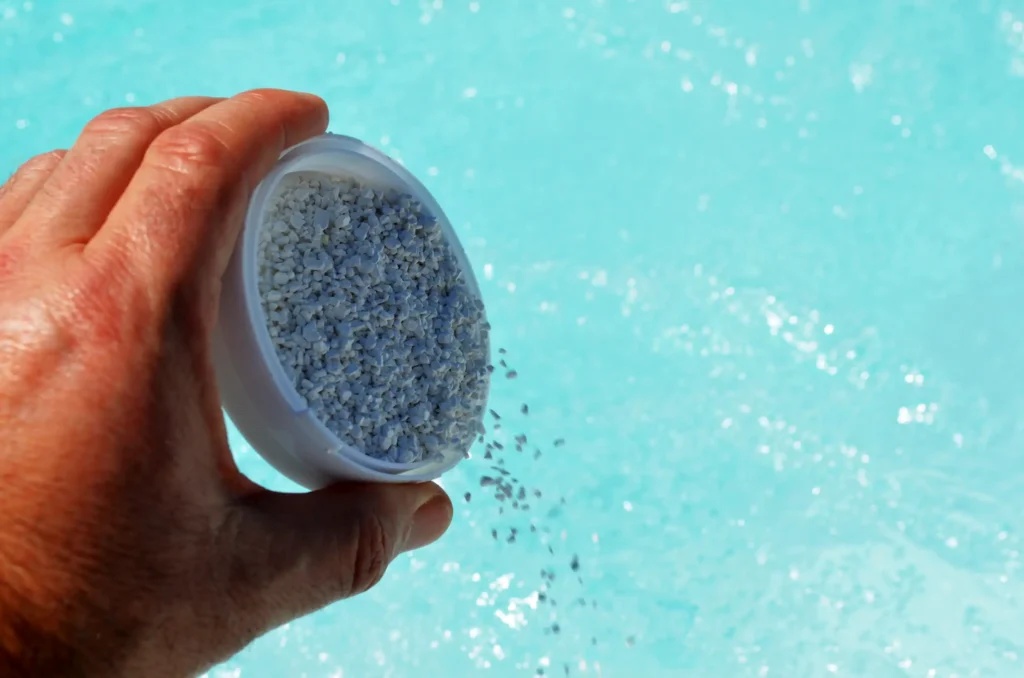
- Chlorine Pools
Chlorine is the most traditional and widely used pool sanitiser. It’s highly effective at killing bacteria, algae, and other contaminants, keeping pool water clean and safe for swimmers.
- How It Works: Chlorine is added to the water either manually (in the form of tablets, granules, or liquid) or via an automatic dosing system. It breaks down into hypochlorous acid, which sanitises the water by killing harmful microorganisms.
- Pros:
- Highly effective at sanitising the water and preventing algae growth.
- Affordable and widely available.
- Easy to manage with well-established maintenance routines.
- Cons:
- Chlorine can cause skin and eye irritation for some swimmers.
- Strong chemical smell is often associated with chlorine pools.
- Requires regular monitoring and dosing to maintain proper levels.
- Overuse or imbalanced levels can lead to issues like chlorine shock or pool corrosion.
Best For: Homeowners looking for an affordable and well-established water sanitisation option who don’t mind a bit more routine maintenance.
- Saltwater Pools
Saltwater pools have gained popularity due to their softer feel and gentler impact on swimmers’ skin and eyes. Contrary to common belief, saltwater pools still contain chlorine, but the chlorine is generated naturally.
- How It Works: A saltwater chlorinator converts salt (sodium chloride) into chlorine through a process called electrolysis. This process continuously generates chlorine to sanitise the pool, making the water feel softer and reducing the need to manually add chlorine.
- Pros:
- Lower chlorine levels, making the water gentler on skin, eyes, and swimsuits.
- Less maintenance compared to traditional chlorine pools—no need to manually add chlorine.
- Reduced chemical odor and irritation.
- Cons:
- Higher initial cost due to the salt chlorinator equipment.
- Saltwater can be corrosive to some pool equipment, especially metal fixtures and certain types of pool surrounds.
- The salt cell in the chlorinator requires regular cleaning and may need replacing every few years.
Best For: Homeowners who want lower maintenance and gentler water and are willing to invest in a higher upfront cost for long-term benefits.
- Mineral Pools
Mineral pools offer a gentler and more luxurious alternative to traditional chlorine pools, enhancing the benefits of saltwater systems. Contrary to common belief, a mineral pool is essentially a saltwater pool where chlorine is naturally generated, but with the added advantage of enriching the water with natural minerals like magnesium or potassium. These minerals not only help keep the water clean and soft but also provide health and wellness benefits, creating a spa-like swimming experience.
- How It Works: A mineral pool system uses a combination of minerals, usually magnesium to enhance water quality. While the pool will use small amounts of chlorine or salt, the mineral composition reduces the need for harsh chemicals and helps balance the water naturally.
- Pros:
- Gentle on skin and hair due to the natural mineral content, making it ideal for people with sensitive skin.
- Therapeutic properties: Minerals like magnesium have health benefits, promoting relaxation and reducing muscle tension.
- Requires less chemical maintenance compared to traditional chlorine pools.
- Cons:
- Higher initial costs for mineral systems. Only marginally higher than salt water systems.
- Still requires some chlorine for full effectiveness.
- Mineral pool supplies are sometimes harder to find and can be more expensive than chlorine or salt.
Best For: Homeowners looking for a more natural and luxurious swimming experience, with added health benefits and reduced chemical use.
- Freshwater Pools
Freshwater pools use advanced ionization systems to maintain clean and sanitised water without the need for chlorine, salt, or minerals. These pools aim to provide a swimming experience that’s as close to swimming in a natural body of water as possible.
- How It Works: Freshwater pools rely on advanced ionization systems to purify the water. Some systems use copper and silver ions to kill bacteria and algae, while others use UV or ozone to sanitise the water.
- Pros:
- No added chemicals, making the water incredibly gentle on the skin and eyes.
- Provides a natural swimming experience without the harshness of chlorine or salt.
- Environmentally friendly due to the lack of chemical use.
- Cons:
- Higher initial costs due to the complex ionization systems required.
- Requires careful monitoring of the water’s balance, and sometimes a small amount of salt or chlorine.
- Not as widely available or well-understood as chlorine, saltwater or mineral systems.
Best For: Homeowners who want a truly natural, chemical-free swimming experience and are willing to invest in advanced filtration systems.
Which Sanitisation System Is Right for You?
- Chlorine Pools: Ideal for those looking for a traditional, cost-effective sanitisation system and who don’t mind the extra maintenance involved.
- Saltwater Pools: A great choice for homeowners who want less manual maintenance and softer water, and who are comfortable with a higher upfront cost.
- Mineral Pools: Perfect for families looking for a gentler, more luxurious swimming experience with added health benefits from natural minerals.
- Freshwater Pools: Best for eco-conscious homeowners who want a natural, chemical-free pool environment and are willing to invest in advanced systems for cleaner water.
Choosing the right pool sanitisation system depends on your budget, maintenance preferences, and the type of swimming experience you want. Each option offers different benefits, whether it’s the affordability and effectiveness of chlorine, the low-maintenance nature of saltwater, the therapeutic benefits of mineral pools, or the natural appeal of freshwater systems. Whatever you choose, ensuring your pool is well-maintained and properly sanitised is the key to enjoying crystal-clear water all year round.